
Few things feel more discouraging than doing everything “right” and watching the scale refuse to cooperate. You eat more carefully, move more consistently, maybe even sleep better, yet the number barely shifts. Or worse, it goes up. The frustration isn’t just about impatience. It’s about uncertainty. People begin to wonder whether their effort is wasted or whether they’re misunderstanding something fundamental.
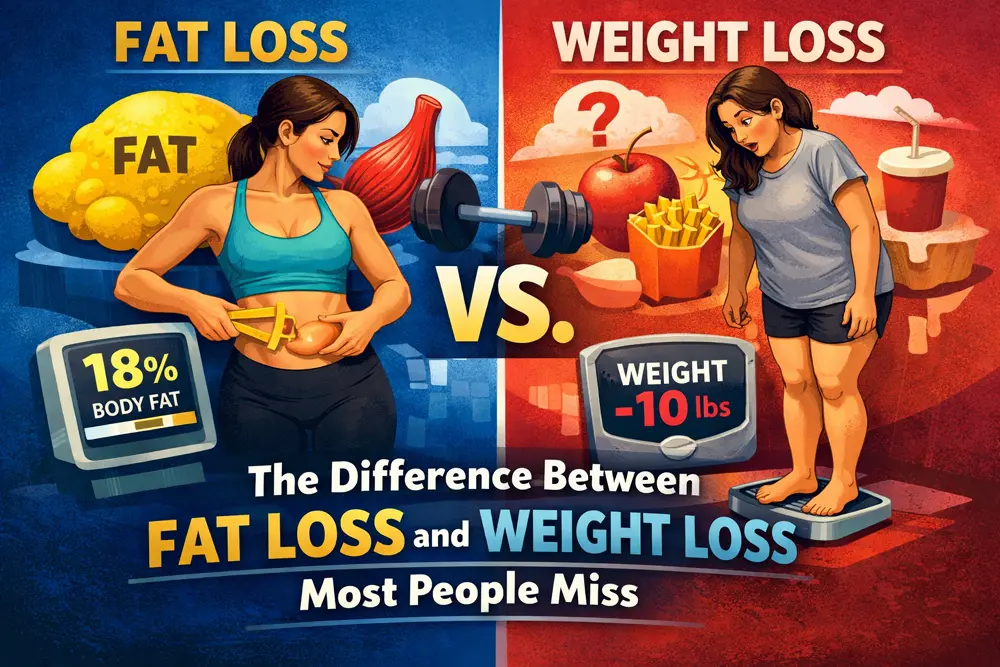
This confusion is common, and it doesn’t come from laziness or lack of discipline. It comes from a widespread misunderstanding about what progress actually looks like. Weight loss and fat loss are often spoken about as if they are the same outcome. They are not. When people treat them as identical, they judge progress using the wrong signals and make decisions that quietly sabotage long-term results.
Why Popular Advice Oversimplifies the Problem
Most mainstream health advice relies on simplicity. “Eat less, move more” paired with “watch the scale” is easy to explain and easy to follow. The problem is that the human body is not a simple system. Reducing progress to a single number ignores the complexity of how the body stores, releases, and reallocates mass.
Scale weight includes everything: body fat, muscle tissue, water, food in the digestive system, and temporary inflammation. When advice treats weight change as the sole indicator of success, it assumes that all these components move together. They don’t. In fact, they often move in opposite directions, especially during periods of positive change.
This oversimplification leads people to chase quick drops rather than meaningful improvements. Short-term weight reduction is often mistaken for fat reduction, even when it comes from water loss or aggressive restriction that the body quickly reverses.
A Scenario Many People Quietly Recognize
Imagine someone who begins strength training after years of inactivity. They keep their food intake relatively steady, increase protein slightly, and follow a routine three times a week. After a month, they feel stronger and notice their posture improving, yet the scale hasn’t budged. Friends suggest cutting food further or adding extra cardio.
What’s happening beneath the surface tells a different story. Muscle tissue is being rebuilt and reinforced. Water is being retained to support recovery. Fat stores may be slowly decreasing, but the scale is masking that change. Without understanding the distinction, the person assumes failure and changes a plan that was quietly working.
What the Numbers Are Actually Showing
Weight is a total measurement, not a diagnostic one. It tells you how much mass your body carries at a specific moment, not what that mass consists of. Fat loss refers specifically to the reduction of stored energy in adipose tissue. These two metrics overlap but are not interchangeable.
Short-term changes in weight are often driven by water balance. Sodium intake, stress, sleep quality, and hormonal fluctuations can all shift water retention by noticeable amounts. Muscle gain further complicates interpretation because muscle is denser than fat. Losing fat while gaining muscle can leave weight unchanged while body composition improves.
Looking at trends over weeks and months provides more insight than reacting to daily readings. Fat loss is a slow biological process influenced by consistency, recovery, and overall energy balance. Weight, by contrast, is reactive and volatile.
Why Small Numerical Changes Matter More Than They Appear
Minor daily differences rarely feel important. An extra hundred calories here or a skipped walk there seems insignificant. Over time, these small choices compound. The same principle applies to fat reduction. Gradual, consistent shifts in behavior influence how the body allocates energy and adapts to demands.
The challenge is that these effects are delayed. People expect immediate feedback, but the body works on longer timelines. Weeks of subtle improvement can pass before visible changes appear. Those who abandon their approach too early often do so just before results would have become noticeable.
Understanding this delay reframes patience as a practical strategy rather than a test of willpower. Long-term change favors those who respond to trends instead of daily noise.
Where Realistic Estimation and Planning Fit In
Relying solely on intuition can make progress feel unpredictable. Estimating intake, activity, or recovery patterns provides a reference point that grounds expectations. This doesn’t require rigid tracking or obsession with numbers. It requires context.
Using a simple estimation approach, such as the one supported by my online estimation tool, allows people to explore realistic ranges rather than exact outcomes. The purpose is perspective, not control. When people understand what changes are reasonable over time, they’re less likely to overreact to normal fluctuations.
Practical Steps You Can Apply Right Away
Clarifying the difference between fat loss and weight loss changes how progress is evaluated. A few grounded practices can help immediately.
- Focus on trends. Compare weekly or monthly patterns rather than daily numbers.
- Use multiple indicators. Strength levels, endurance, clothing fit, and energy matter.
- Allow adaptation periods. New routines often cause temporary water retention.
- Plan realistically. Set expectations based on ranges, not perfect outcomes.
These steps don’t demand perfection. They require consistency and a willingness to interpret feedback calmly.
Common Mistakes That Quietly Skew Conclusions
One frequent mistake is reacting to short-term weight increases with extreme restriction. This often leads to fatigue, muscle loss, and eventual rebound. Another is assuming that visible changes must happen quickly to be valid.
People also underestimate the influence of stress and sleep. Chronic stress alters hormonal balance and water retention, masking fat reduction. When these factors are ignored, individuals blame their strategy rather than the context surrounding it.
Expert Insights and Overlooked Realities
Professionals who work with long-term health outcomes rarely rely on scale weight alone. They prioritize behavioral consistency and gradual shifts in body composition markers. This reflects an understanding that the body prioritizes adaptation and resilience over rapid change.
Age, hormonal cycles, previous dieting history, and medication all affect how fat reduction appears. Ignoring these realities leads to unrealistic expectations and unnecessary frustration. A more analytical approach respects biological individuality and supports sustainable decisions.
Frequently Asked Questions
Why does the scale go up when I’m trying to lose fat?
Short-term increases are often driven by water retention, especially after changes in activity or diet. Muscle repair and inflammation temporarily increase fluid levels, which shows up as added weight.
This doesn’t mean fat gain. Over time, as the body adapts, water balance stabilizes and longer-term trends become clearer.
Can fat loss happen without any change in weight?
Yes. Fat reduction can occur alongside muscle gain or increased hydration. Because muscle is denser than fat, overall weight may stay the same even as body composition improves.
This is why relying on weight alone often hides meaningful progress.
How long does fat loss usually take to show?
Timelines vary widely. Some people notice changes within weeks, while others require several months. Starting point, consistency, stress, and recovery all influence the pace.
Focusing on habits rather than deadlines leads to better long-term outcomes.
Is daily weighing helpful or harmful?
Daily measurements can reveal trends, but only if interpreted calmly. For some, frequent weighing increases anxiety and reactive behavior.
If daily numbers feel overwhelming, weekly averages or periodic check-ins may be more useful.
How can I plan without becoming obsessive?
Planning works best when it provides boundaries rather than rigid targets. Estimation helps set realistic expectations without demanding perfection.
The goal is understanding patterns, not controlling every variable.
Clarity Creates Confidence
Understanding the difference between fat loss and weight loss removes much of the frustration people experience. It shifts attention away from daily fluctuations and toward meaningful trends. With this clarity, decisions become calmer and more informed.
When people stop reacting to every number and start interpreting what those numbers represent, progress becomes easier to recognize. Confidence grows, consistency improves, and long-term change feels achievable rather than elusive.