
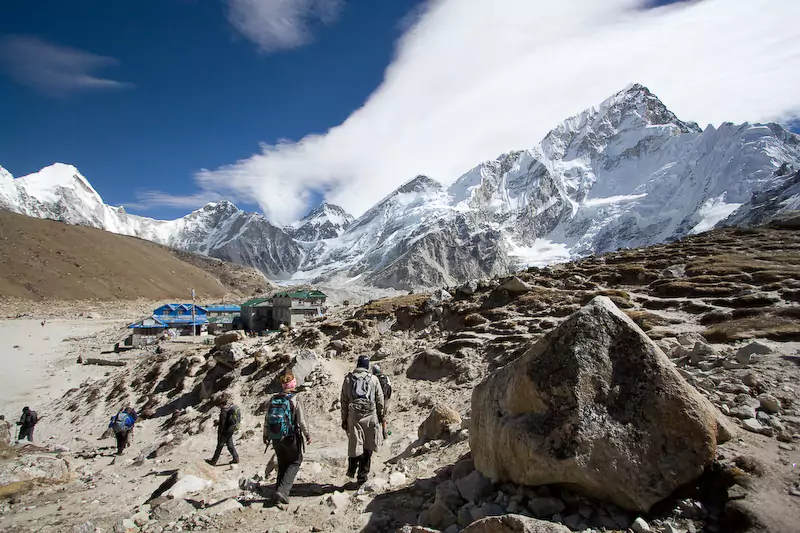
Image Credit: flickr.com
On an EBC hike, it is important to spend some thought regarding charging your electronic devices, since the power supply gets more sparse and expensive the higher you get. In fashionable, charging offerings are available in most teahouses alongside the trail but typically price anywhere between NPR three hundred and 800 consistent with device above Namche Bazaar. They’re commonly powered through solar panels or small hydro structures, so strength is confined, and it may not be to be had on cloudy days or while the visitor hordes descend.
To stay related and powered up, deliver along a high-capability strength financial institution (10,000- to twenty,000-mAh range) and maintain a solar charger in your backpack, if you need it. If you’re the type of character who wishes to feed a group of gadgets in the time it takes to bathe, then get yourself a reasonably-priced multi-port USB charger. Bring your electronics (phone, clothes warmers) in your sleeping bag while you sleep to keep them warm; cold drains battery life very quickly when you’re up high.
Put the phone in airplane mode or turn it off when not in use to conserve the battery. Pitch your nonessentials and carry on with the things you need, like a camera, a phone, a headlamp, and — why not, right? — a GPS watch. Charge it first for safety and navigation tools.
Where to Charge My Electronics on the Everest Base Camp Trek?
Power and Charging on the Everest Base Camp (EBC) Trek Charging or using your power devices along the trek can usually be done at the teahouses/lodges in towns. At the bigger villages like Namche Bazaar, devices can be charged at most lodges, and there are charging facilities (which are powered by solar (or occasionally micro-hydro) power). But then electricity also becomes more scarce as you gain elevation, and you are prohibited from using chargers for charging (NPR 300-800 per device). Come organized, in particular in case you’re making plans for long treks into the hinterlands of the characteristic park, in which you’ll probably find restrained or no charging possibilities. Energy from the wall may be risky, especially whilst there is inclement weather, so it is strongly recommended to have a backup, consisting as a strength bank or solar charger. Always enquire with the lodge staff about charging and prices before you plug in, and never overload already stretched electricity supplies – be mind of local resources.
Which Is the Best Power Bank for the Everest Base Camp Trek?
A power bank of high capacity while trekking to the Everest Base Camp is a must. For a long-haul trip, go for one of 10,000 to 20,000 mAh that’s strong enough to power a phone, camera, GPS, and headlamp for several days off-grid. Please no flimsy bullshit though, opr even lightweight only ones because then you will have a LONG endless walk. Choose ones that have several USB ports and can charge several gadgets at once. Some models also include built-in solar charging panels, but these make for a more appropriate — though not primary — power source, because sunshine can be so inconsistent in the Himalayas. It’s best to always bring a power bank and extra charging cords before your trek and to try to charge your power bank before you begin. It\’s the trip you have long planned for and Plan B (well, it better be), to have a good power bank so that your devices never go off and you click that picture-perfect shot, navigate with confidence, or stay connected with your loved ones. I don’t use it elsewhere, only on the EBC trek for camera/phone.
Can I Charge My Devices on Solar on My Everest Base Camp Trek?
You may need to recollect using solar chargers as a part of your electricity arsenal to charge your gadgets during your Everest Base Camp trek, but don’t depend on the few days of solar as your most effective supply of juice. The excessive elevation affords sturdy sun radiation, but weather can vary, and clouds and snow are common, making solar series less green. If you won’t be out on the path all day, you may recharge your energy bank with a portable solar panel, mainly during sunny stretches at lower elevations. Pick out transportable, folding, mild solar chargers that can be focused on you with no problem. Keep in mind that solar charging is slow, and it takes longer than normal electrical power, so wait. A solar charger should work together with a big-capacity power bank if you need to get a timely charge. It also takes the load off existing electricity infrastructure (and lets you bring a little green with you) and offers well-meaning patronage to local communities along the trail.
How expensive is charging your electronics during the Everest Base Camp Trek?
Charging things along the EBC trek comes at a price, especially beyond Namche Bazaar. The cost of charging averages around NPR 300 to NPR 800 ($2.50 to USD 7) per device, per charge. The higher-altitude lodges are pricier to stay at due to scarce and expensive electricity supplies. Some lodges include charges in the price of your room, but it’s more prudent to budget for extra charges. Electricity is often generated from solar or micro-hydropower; it’s a limited resource, and prices may fluctuate depending on the season. You can save much more if you intend to charge less by bringing power banks and switching off the power when not in use. Make sure you ask your lodge. Regarding the charging fee, before you go. Shoddy accounting that treats fee charging as just part of the overall cost.
How Can I Keep My Battery Alive When Hiking in the Mountains?
When you’re hiking to Everest Base Camp, it’s easy to run out of battery – electricity is rare and hard to come by, and it’s expensive when it is! To preserve your tool’s battery life, preserve it in airplane mode when you are not the usage of it and turn off the history apps that eat power. While no longer in use, dim your display and turn off vicinity offerings or Bluetooth. Take advantage of the energy-saving modes that most smartphones and cameras offer. Don’t use your device in cold weather, as cold drains your battery, but the heat released by the device will be enough to keep it warm, in cold enough weather, even that heat won’t be sufficient. Load your device inside your jacket next to your torso if very cold weather is predicted. The short icy or snowy days run, keep them in a bag, or a pocket on your body tucked under a layer or a couple over the night. B) Remove unimportant notifications and restrict the usage of technologies. If you have the opportunity, charge your devices as much as you can and charge your power banks whenever you have access to power, so they are all at full power. Power to your camera, GPS, or communications platform does not need to be sacrificed while on the road.
What kind of Charging Adapters and Plugs are needed in the EBC Trek?
The general power voltage in the Everest Base Camp trek is Standard, and the frequency is 50 Hz. It’s 220 V from plugs type C (Europlug) and D (Indian). Similarly, you’ll want a quality universal travel adapter, which works with these types of plugs. With limited numbers of plug sockets in a lot of the teahouses, a small multiport USB adapter is ideal for charging lots of things at once. And if you have a lot of gadgets to charge, bring a power strip; just be prepared to carry a heavy load in remote areas. Check twice if your charger is compatible with your voltage to prevent voltage damage. If you carry an adapter, however, you can charge at every stop (and not depend on costly chargers or wear out the battery).
CAN I CHARGE MY LAPTOP DURING THE EVEREST BASE CAMP TREK?
Sure, on the Everest Base Camp trek Map, it’s far feasible to rate your laptop; however, except in a very few situations, you won’t want to, and you won’t need to, and also you received’t be able to. Most lodges do not have enough power or dependable electricity to charge laptops, and the process is slow even if you pay. Laptops are also power hogs compared with what we’re used to bearing: phones or cameras that sip power ever so slowly from a battery over time.